As I write this, we are at the start of Week 4, Term 4, and it is only a short leap in time before our St Edmund’s College Year 12 students graduate into the ‘Post-School World’.
Having worked with families for almost 20 years, I have seen that - when students and their families think about the ‘what next’ after the end of High School – it can sometimes cause uncertainty, anxiety, and often fear.
Knowing this, and knowing the incredible goals and potential that our students have, St Edmund’s has a strong, proactive, and collaborative pathway in place to support our students and their families to feel confident, empowered, and excited about their chosen post-school pathways and opportunities.
So, why the focus on Post-School?
Without an intentional focus and collaborative programming around post-school transition, students and their families can feel like they are ‘falling off a cliff’ on the last day of Year 12, not sure where they will land, and what will be on the ground when they get there.
It doesn’t have to be this way.
Post-school transition planning should start as early as the student and their support team is ready. For some, this will be in Year 12, for others it may be in Year 8 or Year 7. Either way, there are some key things to think about.
Post-School Planning: Things to consider
- What are the student’s goals? What would they like to try? Achieve? Do? Not-do?
- Have a chat to their teacher and support team at school: what have they seen the student enjoy and thrive in?
- Is the student interested in work? If so, what does work mean to them? Does it include a work-skills program (such as one that could potentially be funded by NDIS Employment Assistance funding)? Does it include volunteer work? Work experience? Open, award-wage employment? Customised Employment?
- Does the student have goals related to independent living skills, and building their independence both at home and in the community? For example, independent travel skills, and domestic skills such as cooking at home?
- Are there goals relating to social opportunities, community access, and hobbies?
- Does the student have a goal related to relationships, friendships, and building their peer network after school?
- What support needs does the student have around significant transitions and change? Is it worth planning in some therapeutic support around the potential impact of a significant transition such as completing school?
- Think beyond the 5-day school week: what supports and chosen activities does the student want to include in a 7-day-week? When is rest needed?
- What new community or mainstream supports may be able to play a role in a student’s post-school life? Are there supports that may be worth investigating via Centrelink?
- Is the student interested in pursuing further education and study? If so, in what setting? TAFE? Uni? Community College?
- Does the student have goals and needs related to their home and living situation?
- Some services have strict paediatric age limits for support. Do you need to think about making planned changes to supports such as specialist doctors when the student turns 18?
Post-School Transition Planning and the NDIS
Is the student an NDIS Participant? If so, there are some additional things to consider:
- Is the NDIS Plan fit-for-purpose, to support the student’s post-school goals and disability related support needs?
- If not, does the student need to request a change to their NDIS plan? Does the student have a changed need for NDIS supports due to the significant and major life stage/change of finishing school?
- What supporting evidence is needed from treating professionals and NDIS supports, to request a change to the NDIS plan, and provide evidence for recommended and requested post-school NDIS funding?
- Do the student’s NDIS goals need editing, or is there the need for new goals to be added?
- Does the student have independence in navigating the NDIS, or do they require decision making support?
As you can see: there is a lot to think about and plan (which is why I encourage people to plan for post-school as early as possible!).
As the Family Engagement Officer at St. Edmund’s College, I have the privilege of working with our students and families in their post-school transition planning. Some of the key events that we have facilitated this year have included:
- 1:1 family support meetings
- Individual Transition Planning meetings with all Year 12 families, their Homeroom teacher, and our Senior Program and Work Experience Coordinator
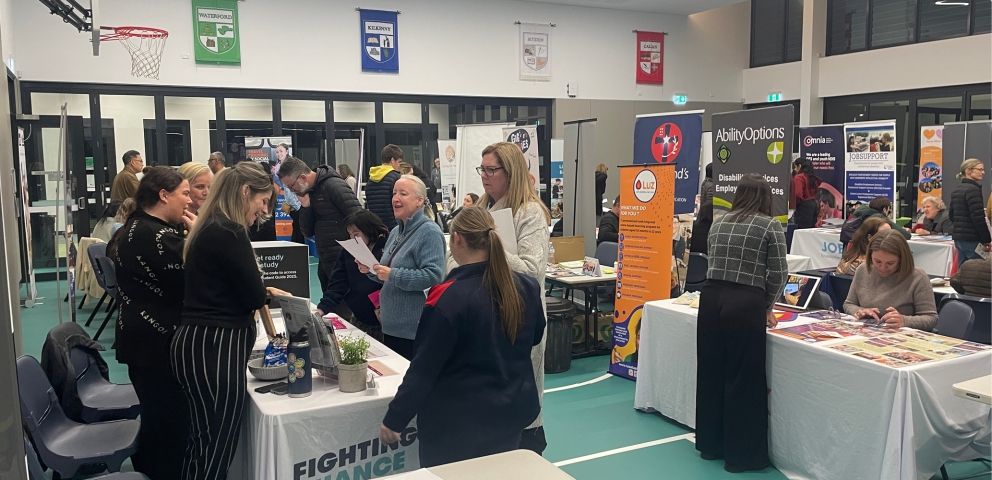
- On-site Disability and Post-School Expo with local service providers
- Service Provider site visits and tours
- Weekly work experience for all Year 12 students
- Regular family workshops and webinars about key post-school topics such as NDIS funding criteria and legislation changes, NDIS Plan Changes, Transport and Travel options, Carer Statements, Intellectual Disability and Health
- Workshops facilitated with sector subject matter experts such as Customised Employment and Legal Future Planning
Assumptions and Expectations
Low expectations can have a hugely negative impact on what students think is possible for them, post-school. It is critical that we provide opportunities for students and their families to see and experience stories about what others have done in their post-school journeys and tackle the risk of ‘you don’t know what you don’t know’ by researching and learning from what things have been possible for others.
Share stories, celebrate the success of others, ask questions, reach out to service providers and ask for a tour and a trial-day. Being prepared can help students to feel excited rather than scared and uncertain about their next steps.
Just this week, St Edmund’s was very proud to share the news that one of our Alumni from 2022- Samuel Burwood – is showcasing his work at a pop-up store in Sydney. Learning from Sam’s post-school pathway can provide the story, inspiration, and ideas to help our next generation of graduates. Sam is an artist, entrepreneur, business owner and founder. It is stories like Sam’s that can show our current students what can be possible in the post-school world. Check-out Sam’s work at https://sammysworldofcolour.com/
Please reach out with any questions or ideas for post-school collaborations to duffy@stedmunds.nsw.edu.au – let’s work together to raise expectations, opportunities, inclusion, and community.
Lisa Duffy | Family Engagement Officer